Robots Don't Work
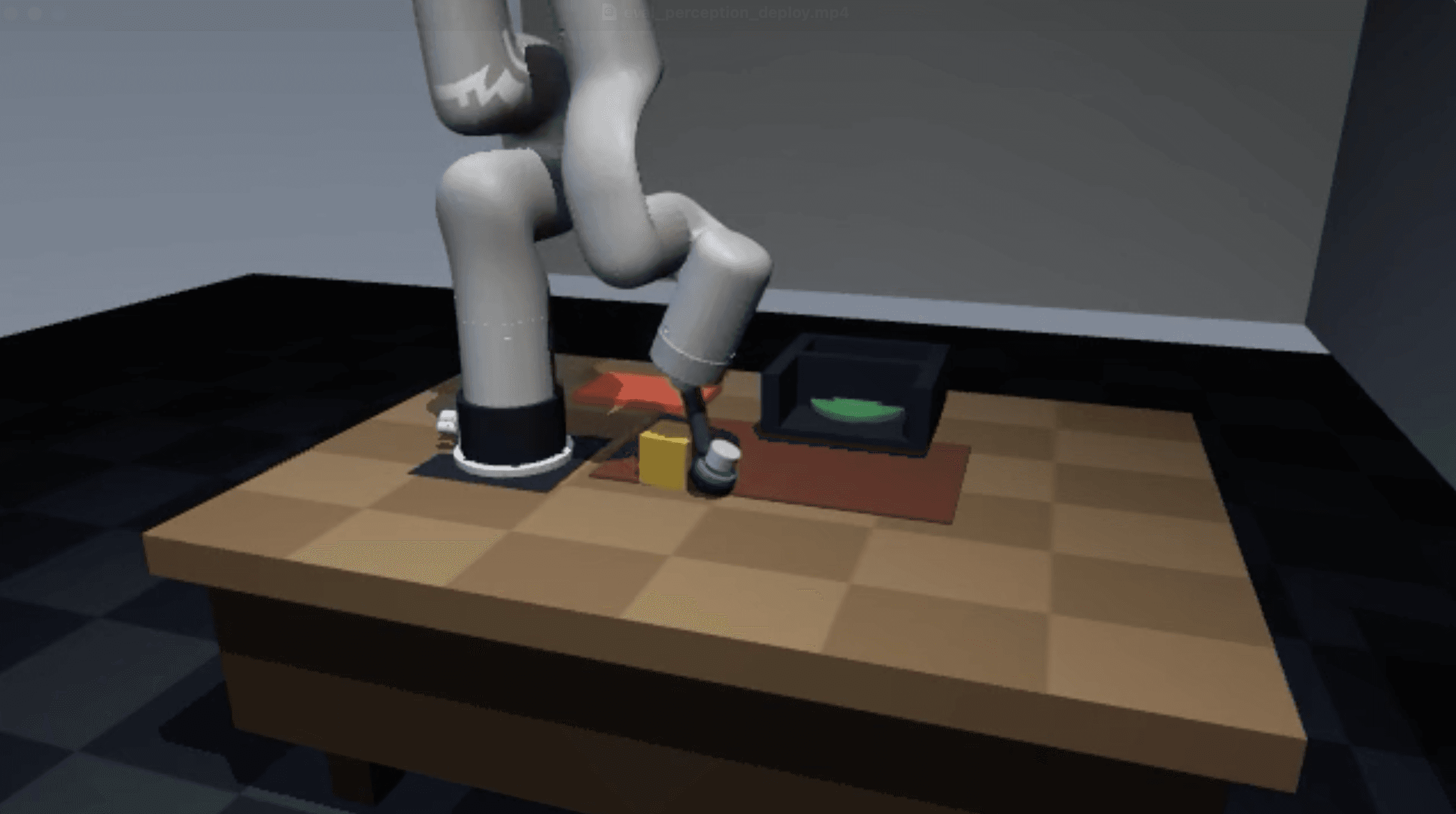
Robots don’t work in the real world. At least, not in the way “Physical AI” is being sold to us. For the last few months I’ve kept hearing the same line: Physical AI is only a few months away. I’ve seen this kind of certainty from people completely detached from operators in the real world -before. It reminds me of a time I was stuck in a small room in Mountain View in 2011.
The room smelled like bad coffee and freshman dorms. I was pitching a well-known accelerator on my new company, a distributed petabyte-scale SQL database. During the Q&A, an investor asked, “Who, outside Facebook and Google, would ever need more data than fits on one machine? That’s years away.” I was stunned. I’d spent the previous few months talking to companies across every industry. They were already drowning in data. They all said some version of the same thing: we can’t keep bolting more hard drives onto Oracle.
His investment partner turned to him, gave a quizzical look, turned to me, and shrugged apologetically. We were fucked.
The people with the strongest opinions on infrastructure timing are often the furthest from the people actually running the infrastructure. I learned that once and yet I keep re-learning it. So when all this yapping about the inevitability of Physical AI started, I did the same thing I did in 2011. I went looking for the people already hitting the wall.
The demos look extremely cool. Humanoids doing backflips, laundry folded in seconds, objects moved around at a frantic pace. I’m not dismissing any of that. But where’s the revenue? The funding is easy to find. The valuation is easy to find. The purchase orders are not. In the field, the real industrial deployments are still running classical control policies with some ML for minor task flexibility. Not foundation models plus a little post-training magic. It's not a criticism. It's what's worked for 20 years. But it's a long way from 'Physical AI is here.' Something is breaking between the lab and the factory floor, and nobody on stage wants to talk about it.
So I started asking a simple question: when a robot AI model fails in production, who owns the fix? The model people pointed to the OEM. The OEM pointed to the integrator. The integrator pointed to another $100,000 invoice, service package, or a different vendor. I even talked to NVIDIA at GTC. They were the honest ones. The fluorescent lights dissociated me from the actual time of day and a 4 foot white humanoid was chasing a robodog across the floor. They told me “We’re generating the data for your robot. What you do with it and what you generate is up to you..” The training stack is getting built. The deployment loop is still someone else’s problem.
Every finger pointed further down the stack. That's usually where the rot is. Or the opportunity. Same thing, different lighting.
I went to the people everyone else starts pointing at when the robot stops working. I got on a call with a publicly traded integrator doing ninety million dollars a year in robotics work. Their process for fixing a deployed robot, and I'm quoting: 'somebody at the factory emails us.' Then an engineer spends a week retraining it from scratch. Their business is manual re-engineering. Days to weeks per fix (or cheat and have a human teleoperator jump in). Hundreds of thousands of dollars per engagement, yet the customers aren’t even buying improvement. They’re buying baseline: make the robot pick this part and put it in the box. Now the part changed color. Retrain. Now it changed shape. Retrain. Now the sun is blowing out the camera. Put up curtains. The industry is drowning in a retraining doom loop. A robot fails, a team patches that failure, the patch stays local, and the next deployment learns nothing from it. Nobody’s getting smarter. Meanwhile, every one of those customers has a $20 ChatGPT subscription on their phone that gets better every week. They feel the mismatch.
They feel the gap.
I've watched this exact con run before. Big data, 2009. Hadoop, MapReduce, S3. The foundation shipped first and everyone called it the future. The revenue didn't show up there. It showed up in the layer that made the foundation stop embarrassing the people using it. I know because I built one of those layers. The stack filled in because it had to.
To be fair, a few people have gotten this right on paper. a16z published two essays in the last month that describe the gap better than most founders do. One of them lists the exact infrastructure checklist that's missing: failure mode characterization, systematic testing, runtime monitoring, graceful degradation, observability. They didn't miss anything in the diagnosis. They also haven't named a portfolio company building the full thing. The essays ended with 'email us.' That's a catalog, not a bet. This is the shape of the problem: the people with the loudest microphones describe it better than they fund it. A good essay about the deployment gap doesn't close the deployment gap.
LLMs have broken how our brains think about product evolution. In chat, the model is the product. There is no integrator between you and Claude. No deployment layer. No factory floor. That’s unusual. It trained everyone to think that once the model gets good enough, the product is done. That logic does not survive contact with robots.
You can subscribe to Claude. You can’t subscribe to NVIDIA GR00T. That’s a research stack, not a deployment platform. A robot that fails on the floor is not a product, no matter how impressive the model looked in a demo. In robotics, the deployment is the product. Which means the layer between the model and a working deployment cannot be an afterthought. That is where the value lives. Everyone in robotics knows this. Nobody wants to build it because building it is ugly.
If you're reading this and you run a factory with robots that don't work, I want to talk to you. Not about selling you something. About what's actually broken. Email me.